5 Business Processes Every Service Business Can Automate
Lead intake, reminders, follow-ups, reporting, and scheduling eat hours every week and quietly lose revenue. Here is what each one costs today and what changes when it runs on its own.
Most service businesses don't lose to a better competitor. They lose to their own admin: the lead answered four hours too late, the reminder nobody sent, the follow-up that slipped, the report that took an evening to assemble. None of it is hard work — it's just constant, and it only gets heavier as you grow. The good news is that the same repetitive shape that makes this work draining is exactly what makes it automatable. Below are five processes nearly every service business runs, what each one costs you manually, and what concretely changes when it runs on its own.
The five processes worth automating first
You don't have to automate everything at once, and you shouldn't. These five are the ones that show up in almost every service business, repeat the most, and pay back the fastest. Start with whichever one is bleeding the most today.
- 1Lead intake — capturing and answering every new inquiry the moment it lands.
- 2Reminders — making sure clients show up and nobody chases them by hand.
- 3Follow-ups — staying in touch with leads who went quiet, at the right cadence.
- 4Reporting — knowing where the business stands without rebuilding a spreadsheet.
- 5Scheduling — booking and rescheduling meetings against a live calendar.
What each one costs — and what changes
It's easy to talk about automation in the abstract. It's more useful to put the manual version and the automated version side by side. The pattern is the same every time: the manual column is full of delay, gaps, and things that depend on someone remembering; the automated column is fast, complete, and consistent whether it's a Tuesday morning or a Saturday night.
Done by hand
- Leads wait hours for a first reply — many move on
- Reminders depend on someone remembering to send them
- Follow-ups get dropped the moment things get busy
- Reports mean an evening of copy-paste into a sheet
- Scheduling is a back-and-forth that risks double-booking
Running on its own
- Every inquiry gets an instant, on-brand answer
- Reminders go out automatically at the right time
- Quiet leads are followed up at a set cadence, every time
- The numbers are always current — no assembly required
- Clients self-book open slots; the calendar stays clean
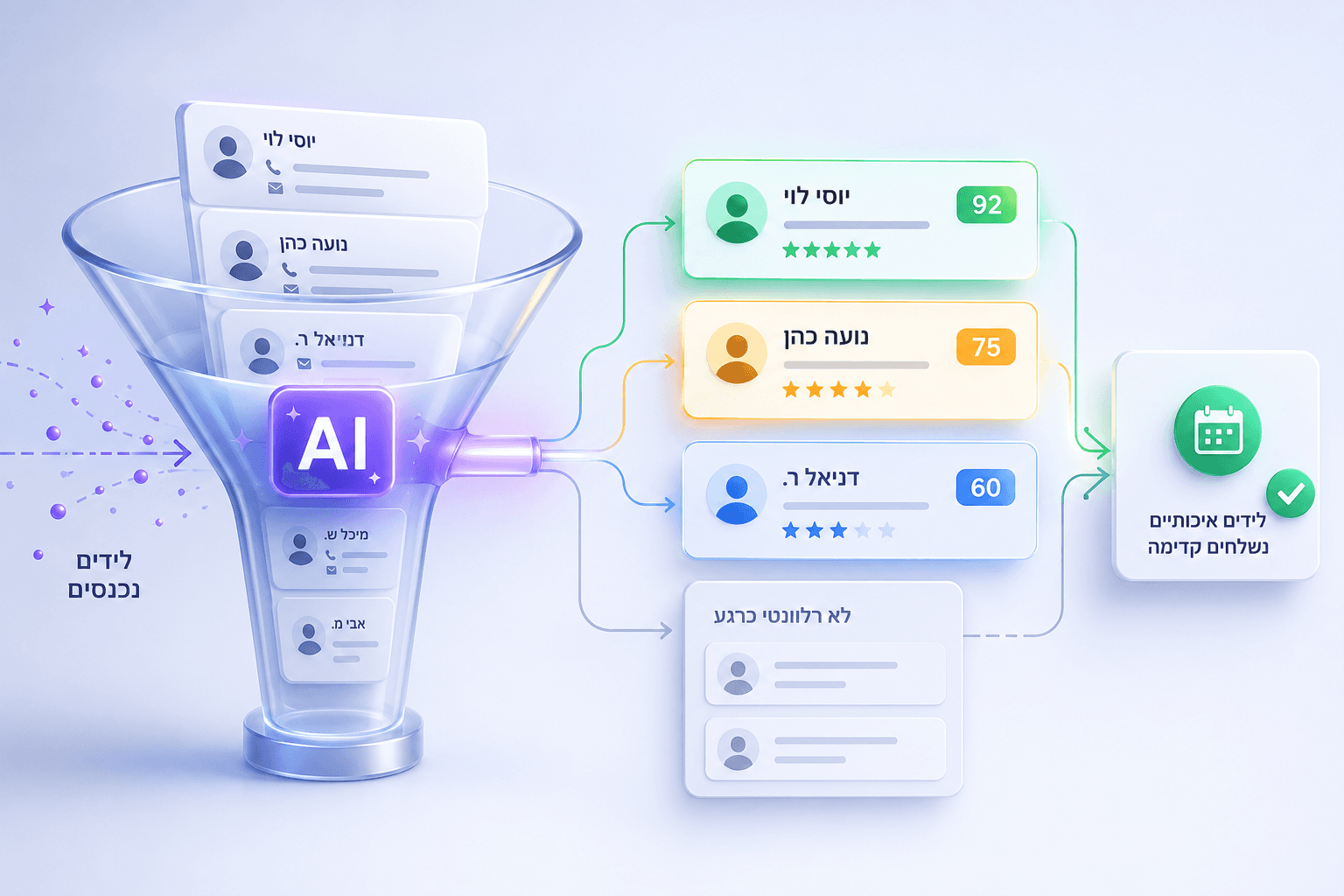
The first process — lead intake — is usually where the leak is biggest, because the cost is invisible. A slow reply doesn't generate an angry email; the lead simply books with whoever answered first. Here is what closing that gap looks like in practice, on the channel most of your leads already use.
Pick the process, not the tool
Don't start by asking which software to buy. Start by asking which of these five wastes the most time or loses the most revenue this month, and automate that one end to end. A single process done properly beats five half-connected tools — and it gives you a clean baseline to measure the next one against.
How the pieces connect
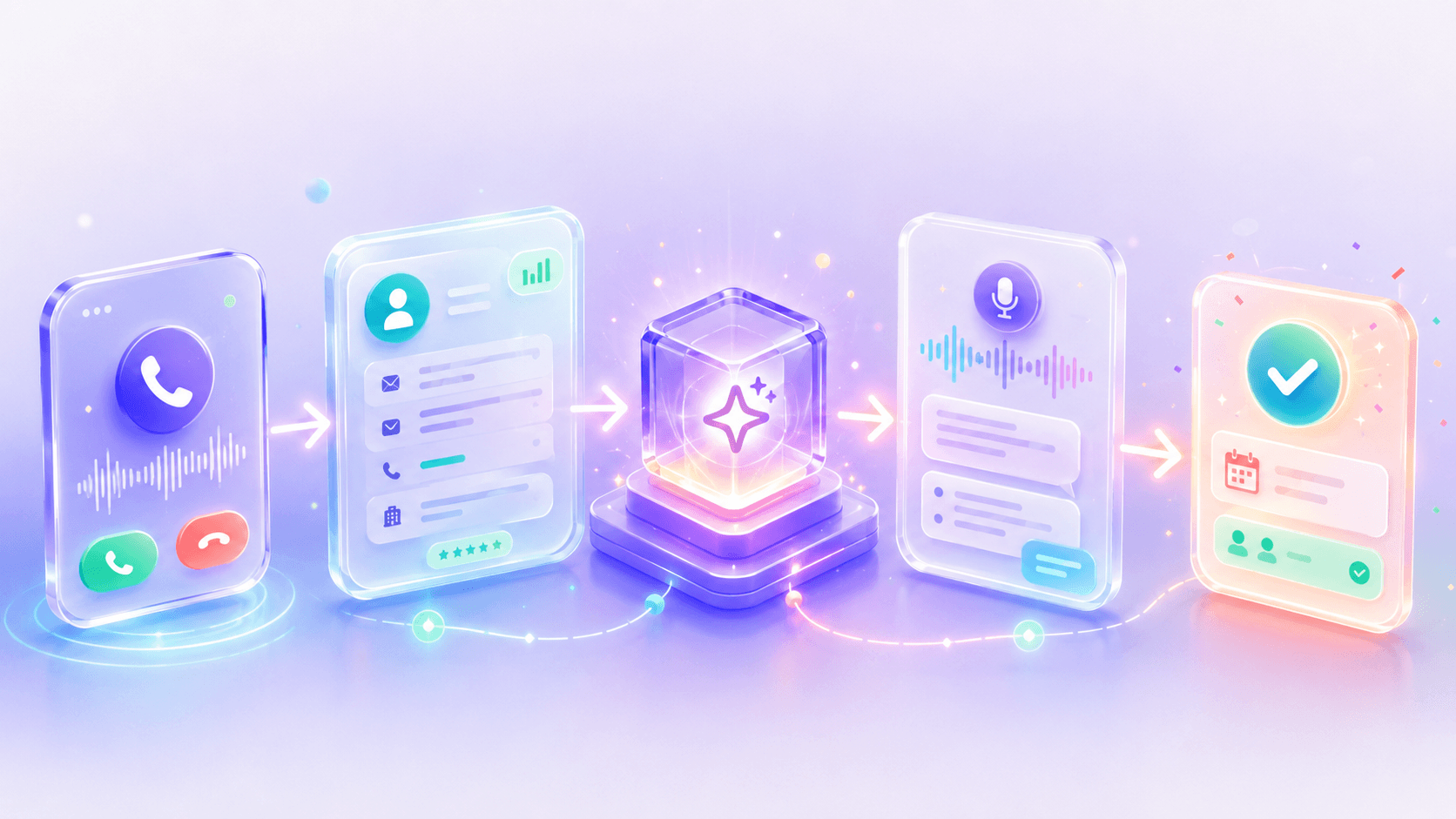
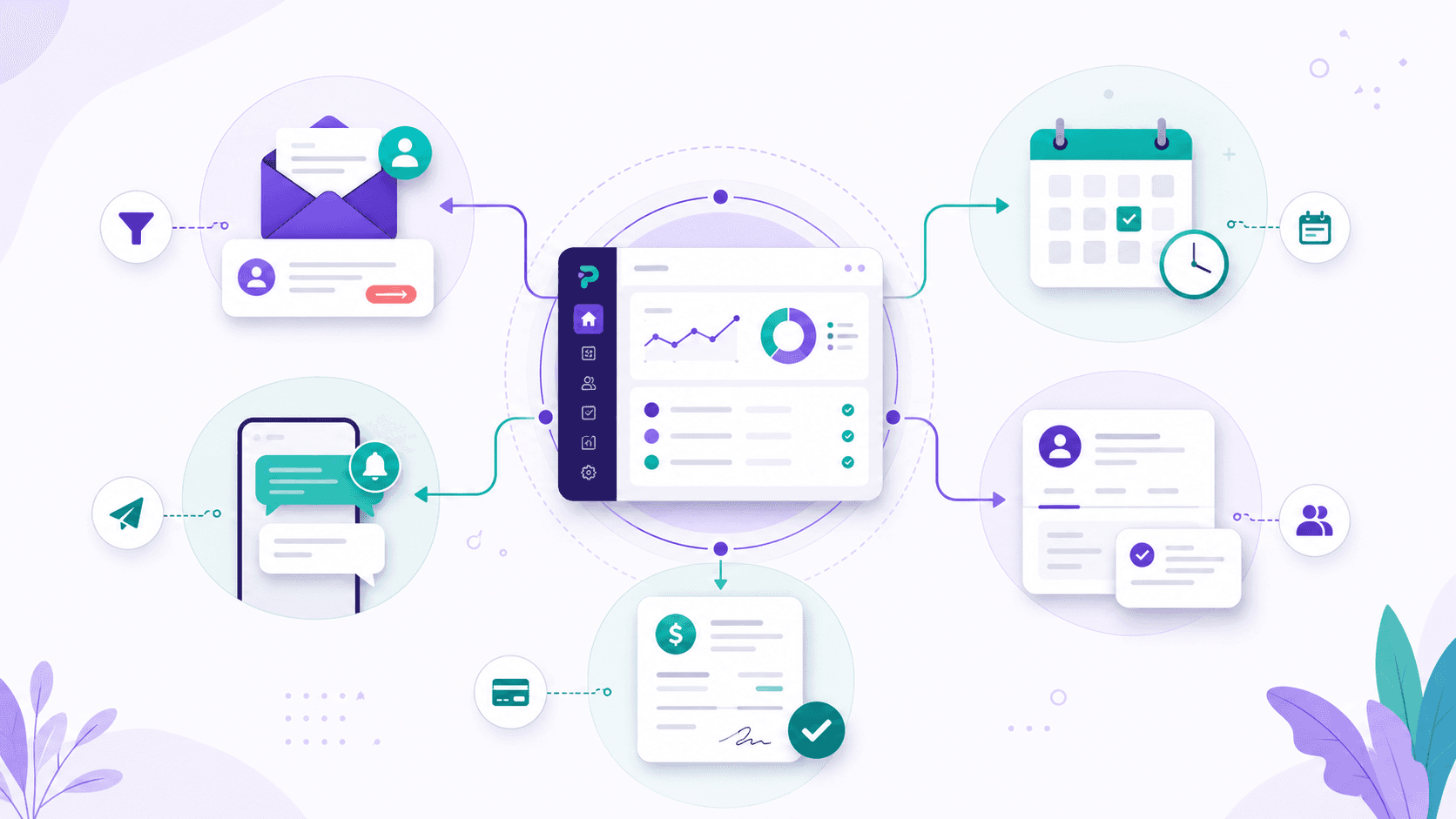
Automated separately, each process helps. Connected, they compound: a lead captured at intake flows straight into a booked slot, a reminder, a follow-up if they go quiet, and a line in your weekly report — without anyone re-typing the same name five times. The sequence below is the backbone most service automations follow.
- 1
Capture the lead
Every inquiry from any channel lands in one place and gets answered immediately.
- 2
Book the meeting
Qualified leads pick an open slot against your live calendar — no double-booking.
- 3
Remind automatically
A reminder goes out before the meeting, cutting no-shows without a phone call.
- 4
Follow up if quiet
Leads who don't respond get a gentle, well-timed nudge instead of being forgotten.
- 5
Report on it
Every step is logged, so your numbers are ready when you want to look at them.
The connected flow
A realistic expectation isn't magic — it's recovered hours and fewer dropped leads. If you currently answer inbound messages within a few hours, moving that to seconds is the kind of change that lifts how many leads turn into meetings. The exact lift depends on your volume and your market, so treat any single number you see online as an illustration, not a promise. The point is the direction: faster, more consistent, and off your team's plate.
Not sure which process to automate first?
In a short consultation we'll look at your current intake, reminders, follow-ups, reporting, and scheduling, and tell you which one will give you back the most time and revenue first — and how it would connect to the tools you already use.
Book a consultation